THE POSSIBILITIES REM[AI]N ENDLESS
Conversations. Iterations. Solutions.
how i got here
With my work and growth in the design and technology field, it was hard not to notice the speed of technological innovation. When AI arrived, it disrupted what we thought the path of technology might look like. Some feared it. Some embraced it. I took the latter path. It’s in my nature to explore possibilities.
For me, AI worked less like an automatic answering machine and more like a thinking partner: a way to make an idea visible, test assumptions, compare alternatives, identify contradictions, and keep thinking when constraints prevented me from getting those insights elsewhere.

01
FRAME
What is the real problem?
02
EXTERNALIZE
Make the thinking visible.
03
CRITIQUE
What works? What are we assuming?
04
ITERATE
Change the question, constraint or idea.
05
CAPTURE
Record what changed and why.
Iteration 1:
Full concept: A lot to decode

ROLE
Design Strategist & Content Designer
Iteration 2:
A calmer hierarchy

AI USE
Concept Mapping, information architecture, visual iterations; dialogue & critique
Iteration 3:
Hierarchy mapped out

OUTPUT
Homepage system & case-study logic
Portfolio Website
Making a way of thinking navigable
Garage Conversion
A 12 × 24 ft conversion shaped by fi xed doors, a shared bathroom, cats, budget, and construction realities.
Iteration 1:
Rough spatial thinking and early layout relationships.

ROLE
Client-partner & spatial designer
Iteration 2:
layout clarified translating the sketch to better spatial arrangement.

AI USE
Constraint synthesis, layout generation, critique
Iteration 3:
constraints resolved; kitchen, bathroom, loft reorganized around fixed conditions.

OUTPUT
Floor-plan direction & visual style concepts
Iteration 4:
spatial direction- testing how the resolved layout could feel as a lived in space.

YN
chicken armour before/after client feedback -> design change fit, stability, movement

ROLE
Design teacher + curriculum & experience designer
DA
Prototype testing -> redesign
Dimensions, materials, and construction

AI USE
Questioning, simulated client feedback, critique, and research prompts
CL
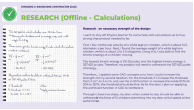
Physics calculations
research -> design decsions informed CAD refinement
OUTPUT
Student-led design solutions & CAD prototypes
AS
Expert feedback -> iteration
new functions and possibilities.

Designing with empathy and chickens
A high school unit connecting design, sustainability and real-world impact.
creativity under constraints
Using a playful scenario to teach design thinking, systems, and problem solving.
Systems Thinking-> consequences
tracking people, skills, health & resources

ROLE
Design teacher + experience designer
Planning-> Spatial strategy
survival needs become a designed settlement to meet needs

AI USE
Scenario logic, branching consequences & troubleshooting
concept-> 3d development
spatial strategies developed through sketchUp or fusion

OUTPUT
Interactive unit system & student design outcomes
decision -> New constraints
Changing scenarios forced teams to adapt
